

God’s Foreknowledge
The Christian doctrine of foreknowledge asserts that God possesses exhaustive knowledge of all future events, including human choices and actions. This means that God knows beforehand what will happen in the world and in individual lives. The concept of foreknowledge is often connected to God’s omniscience, His attribute of knowing all things. Berkhoff states,
“Foreknowledge means that the Eternal God has seen in advance, from all eternity, everything which has happened, is happening, or will happen. He is above and beyond time; there is no past, present, and future for Him; all things are equally present to Him. He knows beforehand what will happen in the course of the years or in the twinkling of an eye.[1]
Bible passages supporting the doctrine of foreknowledge include:
1. Psalm 139:4, 16 (NIV):
“Before a word is on my tongue you, Lord, know it completely … Your eyes saw my unformed substance; in your book were written, every one of them, the days that were formed for me, when as yet there was none of them.”
2. Isaiah 46:10 (NIV):
“I make known the end from the beginning, from ancient times, what is still to come. I say, ‘My purpose will stand, and I will do all that I please.'”
3. Acts 2:23 (NIV):
“This man was handed over to you by God’s deliberate plan and foreknowledge; and you, with the help of wicked men, put him to death by nailing him to the cross.”
4. Romans 8:29 (NIV):
“For those God foreknew he also predestined to be conformed to the image of his Son, that he might be the firstborn among many brothers and sisters.”
5. Revelation 17:8 (NIV):
“The inhabitants of the earth whose names have not been written in the book of life from the creation of the world will be astonished when they see the beast, because it once was, now is not, and yet will come.”
These passages seem to affirm that God’s knowledge extends beyond the present and encompasses all of time, including past, present, and future events. His foreknowledge provides a foundation for His divine plans and purposes in the world and in the lives of individuals.
Open Theism
Open theism is a theological perspective that proposes that God does not possess exhaustive foreknowledge of future events, particularly with regard to the choices and actions of free creatures. Accordingly, God willingly limits His knowledge of the future to respect human free will and to engage in genuine relationships with His creation. This view suggests that certain aspects of the future remain open and contingent on the choices made by individuals and societies. They claim that some of the above verses, such as Isaiah 46:10, are statements of God’s intentions, not necessarily statements regarding God’s knowledge of future counterfactuals. Greg Boyd states,
“God cannot foreknow as certain what the future free actions of humans will be. The future is, in part, open and God, in his wisdom, has chosen to respect this openness. God knows all that can be known, but he cannot know the definite outcome of future free choices. This is the price of creating a world with truly free agents. To put it another way, the future is open and God knows it as open.” [2]
A verse often cited by open theists to support their perspective is found in Genesis 22:12, where God tests Abraham with the sacrifice of Isaac and responds to Abraham’s obedience, saying,
“Do not lay your hand on the boy or do anything to him, for now I know that you fear God, seeing you have not withheld your son, your only son, from me.” (Gen 22:12 ESV)
The phrase, “Now I know that you fear God”, allegedly supports the Open Theistic proposition that God does not have exhaustive foreknowledge. God apparently needed to learn of Abraham’s obedience contemporaneously. Other passages allegedly supporting this proposition include Exodus 32:9-14, 1 Samuel 15:11, Jeremiah 18:7-10, Jonah 3:10, Ezekiel 12:1-3, and Isaiah 38:1-5.
A Personal Story
Earlier in my theological journey, my dire need to preserve libertarian freedom and completely eliminate the notion of determinism pushed me to consider Open Theism. I briefly became convinced. However, after much scriptural and philosophical contemplation, along with debate with evangelical friends, I began to renege on this new view. The following Wednesday evening I went to a service at my church. Completely overwhelmed by this theological question, I couldn’t even focus on the sermon. I pleaded with God under my breath, “God, do you know the future or not!” Immediately, the pastor shouted out, “God knows the future!” Apparently, this was a key point in his sermon; a sermon that I was not even listening to. That providential shout rang loudly in my ears. For me it was confirmation, but of course, such a confirmation is subjective and likely not convincing to other Open Theists. So we shall move off of this brief anecdote to a scriptural argument!
The Inadequacy of Anthropomorphism
Often those of us who oppose Open Theism suggest that passages like Genesis 22:12 are demonstrations of anthropomorphism, or the attribution of human characteristics or behavior to God. Of course, there are some passages that clearly convey such a figure of speech, such Isaiah 59:1, Zechariah 2:8, and Psalm 18:15. However, many other passages that attribute human-like characteristics to God are immersed in plain narratives, seemingly free of poetic expression. These include Genesis 3:8, Exodus 33:11, as well as the “now I know” passages. So, while we cannot deny some anthropomorphic passages, we must be open to a better alternative for this latter class of passages.
A New Argument: The Angel of the Lord
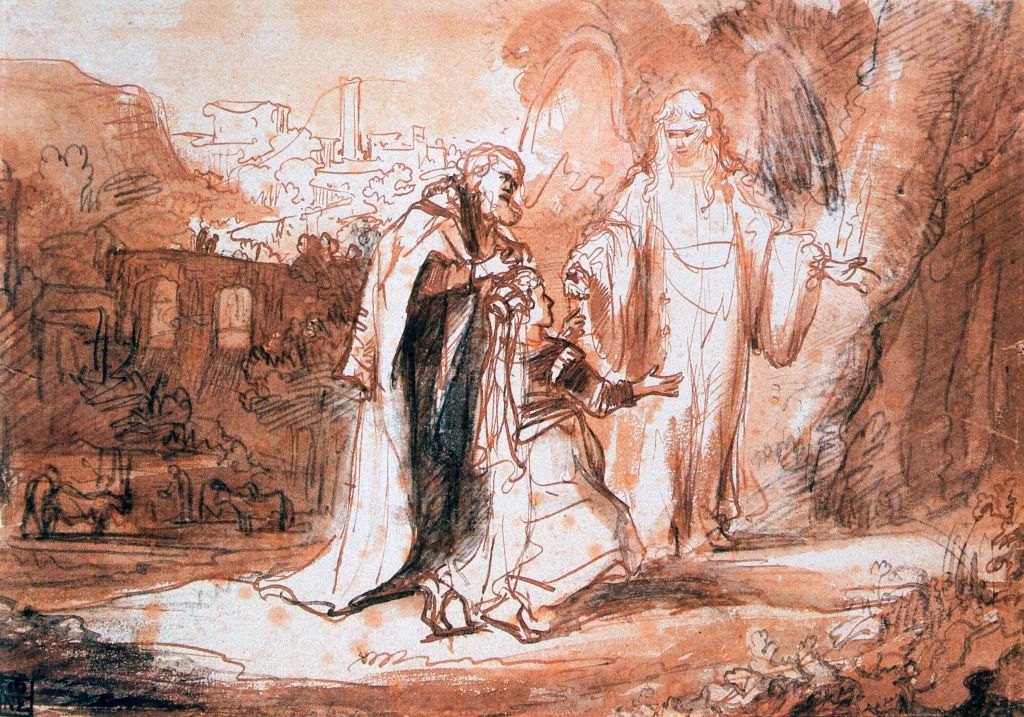
Notice that in the Genesis 22 passage, it was the “Angel of the Lord” (v11) who told Abraham, “Now I know that you fear God.” In the Old Testament, the Angel of the LORD is depicted as a divine messenger who speaks on behalf of God and sometimes performs divine actions. In some encounters, He is even referred to as the LORD Himself (Ex 3:1-6). The fact that the New Testament claims that no man has actually seen God the Father (Jn 1:18, 6:46) may suggest that the Angel of the LORD was the divine agent normally interacting with people in the Old Testament.
There is much Biblical evidence that Jesus and Yahweh (the LORD) of the Old Testament are one and the same Person:
John 12:41 and Isaiah 6:
In John’s Gospel, the apostle connects Isaiah’s vision of the Lord (Yahweh) with Jesus’ glory, indicating Jesus as the fulfillment of the prophetic vision.
Hebrews 1:10-11 and Psalm 102:25-26:
The author of Hebrews quotes Psalm 102, attributing the creative actions described in the psalm to the Lord (Yahweh), and applies it to Jesus as the eternal and unchanging Creator.
Revelation 1:8 and Isaiah 44:6:
In Revelation, the title “Alpha and Omega” is applied to the Lord God, indicating His eternal and all-encompassing nature. This same title is attributed to Jesus in Revelation 1:8, further affirming His identification with Yahweh.
Given these scriptural connections of Jesus and Yahweh, several early theologians understood the Angel of the Lord (Also referred to directly as “the Lord” in Exodus 3:1-6) to be a pre-incarnate appearance of Jesus Christ. Some of these include Saint Athanasius, Saint Hilary of Poitiers, Irenaeus of Lyons, and Theodoret of Cyrus. This belief still persists today. John MacArthur states,
“Jesus Christ is the preincarnate ‘angel of the Lord’ who appeared to Moses in the burning bush as recorded in Exodus 3. This Christophany, a manifestation of the preexistent Son of God in the Old Testament, reveals His active involvement in human history even before His incarnation.”[3]
This proposition could potentially provide a better explanation for the Old Testament “now I know” verses. The Gospels demonstrate that Jesus, although fully God, had a human nature with typical human limitations, including hunger (Mt 4:2), thirst (Jn 19:28), and exhaustion (Jn 4:6). He had to grow in wisdom (Lk 2:52), and He did not know the time of his return (Mk 13:32). If He willingly manifested in the Old Testament with a comparable nature, similar characteristics would be witnessed. Accordingly, the Angel of the Lord ate Abraham’s food (Gen 18:1-8), could be prevailed over when wrestling Jacob (Gen 32:24-30), and had to learn of Abraham’s obedience (Gen 22:11-12).
Does this proposal do damage to the doctrine of hypostatic union, which asserts that Christ’s divine nature fully married with His human nature when He was born of the Virgin Mary 2000 years ago? Not at all. The hypostatic union was fully realized at that point. While Jesus’ preincarnate appearance in the Old Testament might involve veiling certain aspects of His divine nature, and may even entail a temporary union with the nature of an earthly “Angel of the Lord”, it does not negate the essential truth of His hypostatic union, or lessen its efficacy.
One might ask, if one Person of the Godhead can limit His attributes at any time, then why can’t we believe that all Persons of the Godhead limit Their foreknowledge all the time? The answer to this question lies in God’s divine nature. In His purest essence, God is Spirit (Jn 4:24); He is invisible (1 Tim 1:17). God dwells in unapproachable light (1 Tim 6:16). He does not experience hunger (Ps 50:10-12), fatigue (Isa 40:28), dependence (Ac 17:25), or learning (Isa 40:13-14). God can only limit His attributes when He adds a non-divine nature, such as a human or “Angel of the Lord” nature, to His divine nature. It is only these other natures that experience earthly limitations.
Conclusion
In conclusion, while defending God’s foreknowledge against open theism, it is essential to recognize the significance of the Old Testament appearances of the Angel of the Lord. Embracing the view that Jesus Christ, as the preincarnate Word of God, took on the role of the Angel of the Lord provides an intriguing perspective. Preincarnation involved the voluntary veiling of certain divine attributes while taking on the nature of an earthly “messenger”, which could include limitations on foreknowledge. This understanding allows for a harmonious reconciliation between God’s foreknowledge and the dynamic interaction with human history, underscoring the profound mystery of Christ’s dual nature as fully God and fully man (or in this case “fully earthly messenger”). As we delve into the depths of these theological intricacies, we are led to a deeper appreciation of God’s multifaceted nature and His remarkable dealings with human history.
Click on the SUBSCRIBE button below to get email notifications when we post new articles!
Click on our Middle Ground Theology Facebook Page link below to come and join the conversation!
End Notes:
[1] Louis Berkhof, Systematic Theology (Grand Rapids, MI: Eerdmans, 1939), 66.
[2] Gregory A. Boyd, “God of the Possible: A Biblical Introduction to the Open View of God,” Grand Rapids, MI: Baker Books, 2000, p. 33.
[3] [1] John MacArthur, The MacArthur Study Bible, 2nd ed. (Nashville, TN: Thomas Nelson, 1997), 90.
 The Middle Ground
1Sam23:12 Then said David, Will the men of Keilah deliver me and my men into the hand of Saul? And the Lord said, They will deliver thee up.
13 Then David and his men, which were about six hundred, arose and departed out of Keilah, and went whithersoever they could go. And it was told Saul that David was escaped from Keilah; and he forbare to go forth”. David and his men left and changed what God foreknew. A priest traveled down a road “by chance”. The Pharsees rejected the counsel of God. Choice is always available, foreknowledge is not foreordained
LikeLike