

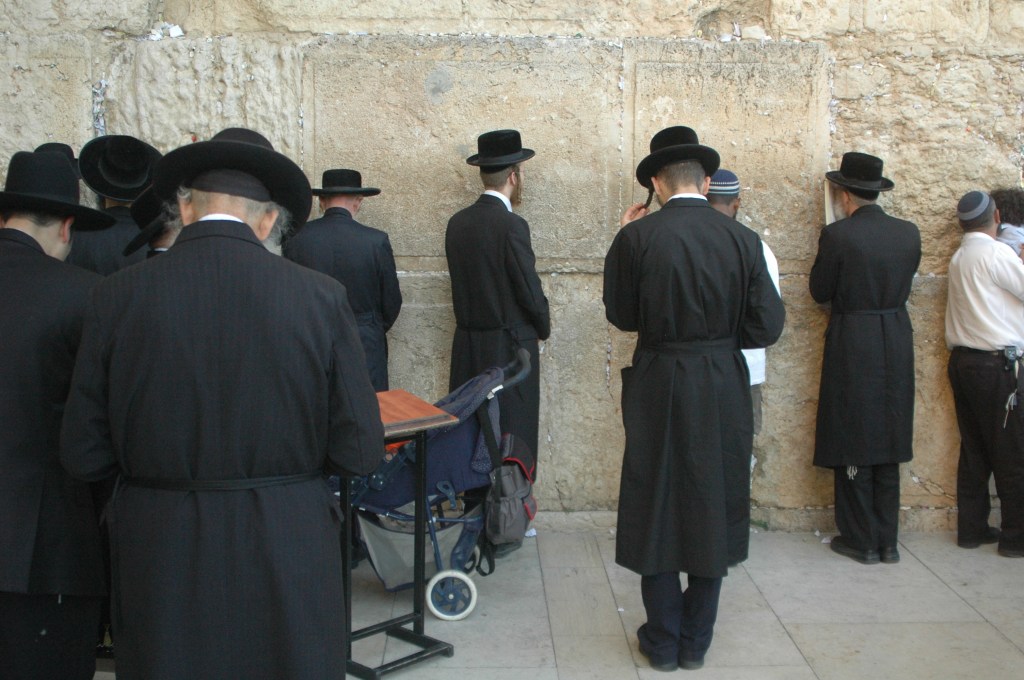
The phrase “all Israel will be saved” in Romans 11:26 has sparked vibrant discussions and divergent interpretations among biblical scholars and theologians throughout history. Unraveling the enigmatic meaning of “all Israel” in this verse has become a captivating endeavor, showcasing the complexity and depth of Paul’s writings. Below is a summary of the main views.
Summary of Main Views
1. National Israel:
This perspective understands “all Israel” as referring to national Israel. Adherents believe there will be a future salvation for the entire nation of Israel through faith in Jesus Christ. This aligns with Old Testament prophecies predicting Israel’s future national and spiritual revival.
Biblical Reasons:
- Paul’s emphasis on God’s faithfulness to His covenant with Israel (Rom 11:26b-27)
- The broader context of Romans 9-11, which addresses the relationship between Israel and the Gentiles.
- The expectation of a future “fullness” of the Jewish people embracing Jesus as the Messiah. (Rom 11:12, 15)
This view is often associated with theological perspectives such as Dispensationalism and some forms of Premillennialism.
2. All Believers:
This view interprets “all Israel” as representing the entirety of God’s people, including both Jewish and Gentile believers. It emphasizes the universal nature of salvation and spiritual unity in Christ, transcending ethnic distinctions.
Biblical Reasons:
- The overarching theme of God’s inclusion of the Gentiles in His redemptive plan. (Gal 3:29)
- Paul’s previous statements on the unity and equality of believers in Christ. (Gal 3:28)
- The understanding that true Israel is constituted by those who have faith in Jesus. (Rom 2:29, 9:6)
This view is often associated with theological perspectives such as Covenant Theology and some forms of Amillennialism and Postmillenialism.
3. The Elect within National Israel:
This perspective sees “all Israel” as referring to a faithful remnant within the nation of Israel, comprising Jews who have accepted Jesus as the Messiah. It emphasizes continuity with the Old Testament understanding of Israel as an elect remnant chosen by God.
Biblical Reasons:
- The imagery of the remnant in the Old Testament and its continuity in Paul’s writings.
- Paul’s reference to the “elect” and the concept of a remnant in earlier chapters of Romans. (Rom 9:6, 27)
- The belief that God’s promises to Israel are fulfilled through a faithful remnant within the broader nation. (Rom 11:5, 14)
This view is also typically associated with Covenant Theology and some forms of Amillennialism and Postmillenialism.
Given this brief introduction to the main views of Romans 11:26, I propose a Middle Ground view that is derived contextually and analytically through tracing key references and time indicators in the chapter. I will argue that the correct interpretation includes both #1 and #3. In other words, “all Israel” is a reference to God’s true spiritual Israel within Israel; nevertheless, there will be a time when that group reaches a fullness by the sudden expansion of God’s Jewish election. I call this an “expanded elect Israel” view.
To begin, please see the timeline and key references below:

This chart flows in time from left to right. Reference (A), illustrated by white space in the red box, refers to the majority of national Israel that is blinded throughout time, especially during Paul’s “present time”. Reference (B), illustrated by dots in the red box, refers to the elect remnant of national Israel that has been saved throughout time, up to Paul’s “present time”; a sparse remnant. At any given time throughout history, national Israel has been comprised of the white space plus the dots, or (A+B). However, in the future, the nation Israel will be converted after the fullness of the Gentiles come in; a reversal which will hereafter be referenced by (A–>C). Reference (C), illustrated by the dense dots in the green box, refers to this future elect majority of national Israel.
Romans 11 – Section 1
There are two major sections to the chapter, each starting with “I say then”. The first section deals with the vindication of God in the “present time”.
Below is the first section of the KJV text, with the references marked.
1 I say then, Hath God cast away his people (A+B)? God forbid. For I also am an Israelite, of the seed of Abraham, of the tribe of Benjamin. 2 God hath not cast away his people (A+B) which he foreknew (B). Wot ye not what the scripture saith of Elias? how he maketh intercession to God against Israel, 3 saying, Lord, they have killed thy prophets, and digged down thine altars; and I am left alone, and they seek my life. 4 But what saith the answer of God unto him? I have reserved to myself seven thousand men, who have not bowed the knee to the image of Baal. 5 Even so then at this present time also there is a remnant according to the election of grace (B). 6 And if by grace, then is it no more of works: otherwise grace is no more grace. But if it be of works, then is it no more grace: otherwise work is no more work. 7 What then? Israel hath not obtained (A) that which he seeketh for; but the election hath obtained it (B), and the rest were blinded (A) 8 (According as it is written, God hath given them the spirit of slumber, eyes that they should not see, and ears that they should not hear;) unto this day. 9 And David saith, Let their table be made a snare, and a trap, and a stumblingblock, and a recompence unto them: 10 Let their eyes be darkened, that they may not see, and bow down their back alway.
Romans 1-11, KJV, References Added
In the above section, Paul defends God’s faithfulness to Israel as a whole (A+B), by reinforcing points made earlier. First, only the faithful remnant of national Israel was ever entitled to God’s salvific covenant blessings (See Rom 9:6, 27). Second, God has always been faithful to reserve such a remnant; in the past (Elijah’s day) and at the “present time” (Paul’s day), including Paul himself (11:1). He has not cast away the elect Jews within Israel (B); those He “foreknew” in a salvific sense (Rom 8:29). Therefore, He has not cast away “His people” Israel as a whole (A+B)!
Romans 11 – Section 2
The next section gives more insight into God’s purpose for blinding Israel during the present age, and the apparent reversal of such blindness at the end of the age.
11 I say then, Have they stumbled (A) that they should fall? God forbid: but rather through their fall (A) salvation is come unto the Gentiles, for to provoke them to jealousy (A). 12 Now if the fall of them (A) be the riches of the world, and the diminishing of them (A) the riches of the Gentiles; how much more their fullness (A–>C) ? 13 For I speak to you Gentiles, inasmuch as I am the apostle of the Gentiles, I magnify mine office: 14 If by any means I may provoke to emulation them which are my flesh (A+B) , and might save some of them (B). 15 For if the casting away of them (A) be the reconciling of the world, what shall the receiving of them be (A–>C), but life from the dead? 16 For if the firstfruit (B) be holy, the lump (A+B) is also holy: and if the root (B*) be holy, so are the branches (A+B). 17 And if some of the branches be broken off (A), and thou [Gentiles], being a wild olive tree, wert graffed in among them, and with them partakest of the root and fatness of the olive tree; 18 Boast not against the branches. But if thou boast, thou bearest not the root, but the root thee. 19 Thou [Gentiles] wilt say then, The branches were broken off, that I might be graffed in. 20 Well; because of unbelief they were broken off (A), and thou standest by faith. Be not highminded, but fear: 21 For if God spared not the natural branches, take heed lest he also spare not thee [Gentiles]. 22 Behold therefore the goodness and severity of God: on them which fell, severity (A); but toward thee [Gentiles], goodness, if thou continue in his goodness: otherwise thou also shalt be cut off. 23 And they also, if they abide not still in unbelief, shall be graffed in: for God is able to graff them in again (A–>C). 24 For if thou [Gentiles] wert cut out of the olive tree which is wild by nature, and wert graffed contrary to nature into a good olive tree: how much more shall these, which be the natural branches, be graffed into their own olive tree? 25 For I would not, brethren, that ye should be ignorant of this mystery, lest ye should be wise in your own conceits; that blindness in part is happened to Israel, until (A) the fulness of the Gentiles be come in.
Romans 11:11-25, KJV, References Added
* Though I put “B” here, the “root” is specifically referencing the elect forefather of Israel’s covenants and promises, Abraham; not all the elect.
In this section, Group (A) is described as “stumbled” (v11), “fallen” (v12), “diminished” (v12), “cast away” (v15), “broken off” (v20), and “blinded” (v25) at the present time due to unbelief (v20). Yet, this group is still “holy” for the sake of the present remnant; a holy “lump” containing elect “firstfruits” (v16); holy “branches” sharing the same Abrahamic root as the elect (v17). The elect of Israel are integrally bound to the “commonwealth of Israel” (Eph 2:12), and its covenants, Law, ministry, and promises (Rom 9:4). Salvation is of the Jews (Jn 4:22)!
After expressing Israel’s continued sanctity, Paul reveals God’s ultimate plan to absorb the larger unsaved group (A) into the elect fold. In verse 11, he rhetorically asks if God intends fallen Israel (v22) to fall irreparably. His answer is a resounding “God forbid!” Clearly this demonstrates Paul’s hope and God’s intention for a reversal of their fall. There are also several reversal indicators, marked as (A–>C) in this section, which suggest (A) will be “received” (v15), graffed back in by faith (v23), suddenly reaching fullness (v12). God will achieve this by provoking them to jealousy through the conversion of the Gentiles. In this way, the sparse election (B) will suddenly expand into a dense election (C). The only possible time this mass provocation to faith can occur is after the “fullness of Gentiles”, as there is a hard time boundary imposed by verse 25: “blindness in part is happened to Israel, until the fulness of the Gentiles be come in”. This blind state of (A) will be sustained “until” this fullness of Gentiles is complete. This Gentile phenomenon, also referred to as the “riches of the Gentiles” (v12), or the “reconciling of the world” (v15), may align with the consummation of Luke’s “times of the Gentiles” which immediately precedes the coming of the Son of Man (Lk 21:24-28). The reversal of affairs at that time will result in an exponential “richness” (v12); also described as “life from the dead” (v15).
One may argue that such a sudden reversal is unnecessary, since Paul speaks of his present attempt to provoke Israel to jealousy and save “some” of them; an alleged smaller group that gradually builds in parallel with the Gentile conversions and up until the fullness of the Gentiles is complete. This is a reasonable argument, but the aforementioned time boundary disallows it. The reversal Paul speaks of is not a gradual phenomenon that occurs during the Gentile conversions, but rather a sudden phenomenon that occurs after the time of blindness is complete; and this time of blindness endures until the fullness of Gentiles is complete. Therefore, Paul is likely highlighting his desire to imitate, with his conversion of the present elect Jews (B), what God will accomplish with a massive future election of a whole generation of Jews (C). Alternatively, given the strong eschatological nature of the apostles’ letters (Heb 1:2, 1 Pet 1:20, 1 Jn 2:18) and the fact that Paul uses the pronoun “some” nearby to represent the whole hardened generation of Jews (Rom 11:17), he could be suggesting that his efforts are aimed at initiating this final mass provocation of the Jews (C); the same “some” who were hardened. Certainly, given the plethora of generations since Israel’s inception, one generation of Jews could still be considered “some” of the whole.
Romans 11:26
This leads us to the heavily debated passage, Romans 11:26:
26 And so all Israel (B+C) shall be saved: as it is written, There shall come out of Sion the Deliverer, and shall turn away ungodliness from Jacob: 27 For this is my covenant unto them, when I shall take away their sins.
Romans 11:26-27, KJV, References Added
Some commentators claim that, due to the salvific unity of Jew and Gentile in Christ (Gal 3:28), “all Israel” must refer to the new Israel, comprised of saved Jews and Gentiles. However, salvific unity does not destroy distinct roles and purposes in the kingdom, as is demonstrated by those of men and women (1 Cor 11:3, Eph 5:24) who are also indistinct “in Christ” (Gal 3:28). Therefore, including Gentiles in the term “Israel” in Romans 11:26 is unnecessary and artificial, especially given Paul’s consistent distinction between the two throughout the chapter.
Other commentators insist that Paul’s reference to national Israel in verse 25 necessitates the same reference in verse 26. However, Romans 9:6, disproves such an assumption, using “Israel” in two different ways in the same verse! I do not doubt that it is a Judeo-centric promise, however. Paul’s reference to the covenant made with Jacob in verse 27 suggests that is the case. While this makes it tempting to identify “Israel” in verse 26 as national Israel, I believe that “all Israel” is referring to the sum total of spiritual Israel, comprised of the present Jewish election (B) plus the future provoked generation of national Jews absorbed into that election (C). This proposal is based on a few lines of reasoning.
First, the covenants God made with His people, though stated unconditionally, always had either explicit (Gen 12:9-10) or implicit conditions (Gen 22:16-18), which, if not met, resulted in being “cut off” (Gen 17:14, Ex 12:15, Lev 18:29, Num 15:31). Accordingly, God has always had a true seed of “promise” that was never based solely on physical descent, but rather on sincere faith (Rom 2:28, 9:6-12). The rest were “broken off” (Rom 11:17). Therefore, God’s covenant to Israel only ultimately includes the elect; the present remnant, as well as the “broken off” Jews who will be graffed back in at a later time (Rom 11:23).
Second, the prophecy that Paul quotes, Isaiah 59:20-21, strongly supports my proposal.
So shall they [Israel] fear the name of the LORD from the west, and his glory from the rising of the sun [i.e. the East] … And the Redeemer shall come to Zion, and unto them that turn from transgression in Jacob, saith the LORD. As for me, this is my covenant with them, saith the LORD;
Isa 59:19-21, KJV, Bracketed items added
A simple reading of this prophecy shows that “them” of verse 21 is referring to “them that turn from transgression in Jacob“. This supports my proposal that a mass revival in national Israel, from the west to the east, will be based on a covenant to those who “turn from transgression in Jacob“, or the elect within national Israel. This is the true “Israel” that will be saved in alignment with God’s covenant with them.
Third, Paul seems to be summarizing the two-part argument from the two prior sections; Section 1 regarding God’s faithfulness with a remnant in the “present time” (B), and Section 2 regarding God’s faithfulness regarding Israel’s future election (C). The phrase “and so” in verse 26 is rendered from the Greek kai houtos, which means “in this manner”. Paul is saying, that, in the manner detailed in the preceding sections — i.e. the blinding of the current non-remnant Jews, the conversion of the Gentiles unto their fullness, Paul’s present saving of “some” provoked Jews, and the final all-encompassing provocation of the rest of Israel — all true Israel will be saved; the sum total of spiritual Israel across the ages (B+C). Therefore, God is vindicated in His actions, never having failed Israel; for “not all who are descended from Israel belong to Israel” (Rom 9:6, ESV). This interpretation best fits the whole context of Romans 9-11.
Remaining sections of Romans 11
28 As concerning the gospel, they are enemies (A) for your sakes: but as touching the election (B+C), they are (A) beloved for the fathers’ sakes. 29 For the gifts and calling of God are without repentance.
Romans 11:28-29, KJV, References Added
Here, Paul reiterates to his Gentile audience that, while they may see blinded national Israel (v25) as an enemy of the Gospel, God sees them as beloved because they contain the “election”; the true “all Israel” (v26) from all ages. The selection of national Israel, and God’s accompanying election and calling of spiritual Israel (Rom 8:29ff), ties back to His irrevocable promise to the “fathers” Abraham, Isaac, and Jacob (See Deut 7:6-8).
30 For as ye [Gentiles] in times past have not believed God, yet have now obtained mercy through their unbelief (A): 31 Even so have these also now not believed (A), that through your mercy they also may obtain mercy (A–>C). 32 For God hath concluded them all (A) in unbelief, that he might have mercy upon all (A–>C).
Romans 11:30-32, KJV, References Added
In this section, we see God’s ultimate intention for His ethnic “mercy through unbelief” strategy: That through the hardening of the majority of Israel (A), He would eventually save the majority of Israel (A), absorbing them into the elect (A–>C). At the current time, they are “all” concluded in unbelief, but God intends to have mercy on them “all”.
33 O the depth of the riches both of the wisdom and knowledge of God! how unsearchable are his judgments, and his ways past finding out! 34 For who hath known the mind of the Lord? or who hath been his counsellor? 35 Or who hath first given to him, and it shall be recompensed unto him again? 36 For of him, and through him, and to him, are all things: to whom be glory for ever. Amen.”
Romans 11:33-36, KJV, References Added
Paul’s praise of the wisdom of God is further evidence that God’s master plan far exceeds the “present” state of affairs. Paul was anticipating something grand; Something beyond the imagination.
Conclusion
In conclusion, the exploration of different perspectives on Romans 11 presents an intriguing alternative position that views “All Israel” as the “elect within Israel.” This unique perspective acknowledges the ongoing spiritual remnant within Israel while also anticipating a future hope for the conversion of the broader nation. By embracing both the continuity of God’s election and the expectation of a future restoration, this position offers a balanced and hopeful outlook for Israel’s ultimate reconciliation and fulfillment of God’s redemptive purposes.
Click the SUBSCRIBE button below to get notified by email when new articles are released.
Click the Middle Ground Theology FACEBOOK GROUP link below to join the conversation!
 The Middle Ground